- Home
- Steam Cooking
Steam cooking, engineered for institutions
A patented, KEBS-marked system that cooks solid and liquid meals in bulk, evenly and safely, on a fraction of the fuel.
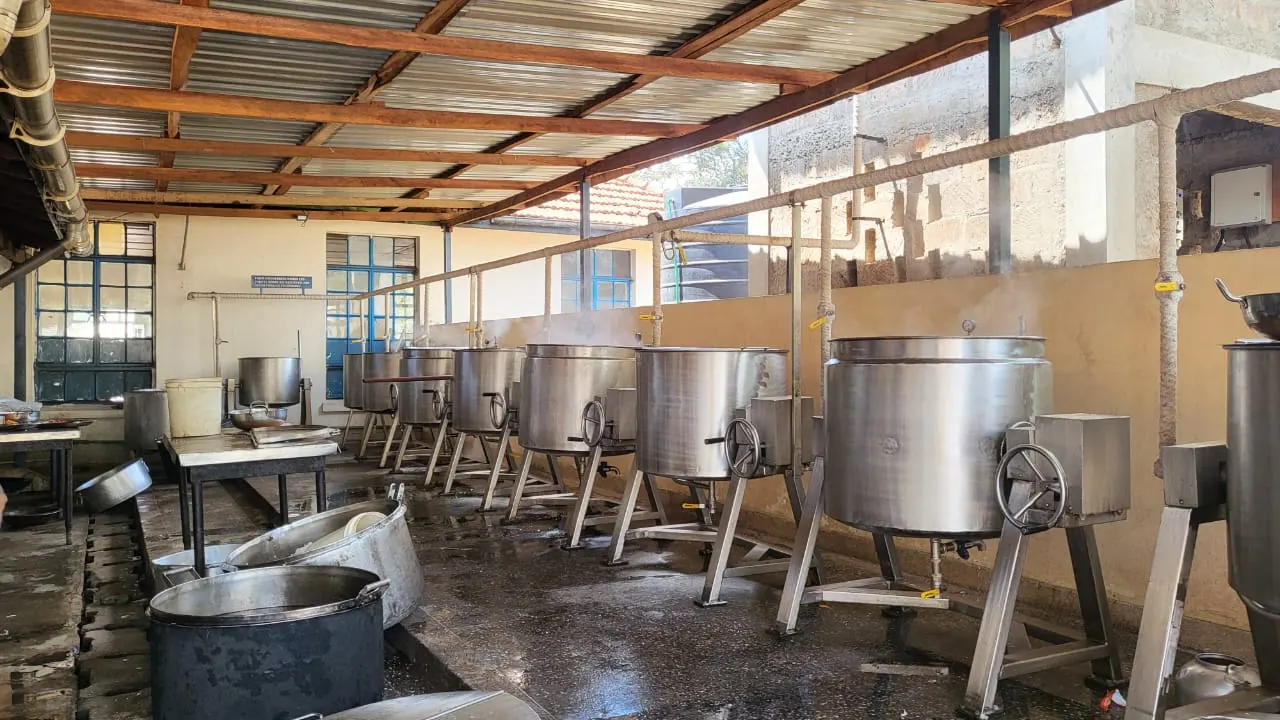
Pressurised steam, piped to sealed stainless vessels
Steam carries heat into the cooking vessels, so food such as ugali or posho cooks evenly without scorching.
One fire or energy source powers several pots at once. The pressure-rated stainless vessels have gauges and valves, and they're quick to clean and sanitise. The result is more meals per hour, less smoke and heat for the cooks, and food that turns out the same every time.
Note: this system is not a pressure cooker. The steam heats the vessel; the food cooks in a closed but conventional pot.
- Cooks ugali, rice, githeri, beans, porridge, meat and vegetables
- Food cannot overcook; heat is controlled within the steam circuit
- Also supplies hot water for drinking, washing utensils and bathing
From generator to plate
Steam generator
LPG or another approved fuel heats water into pressurised steam, outside or in a ventilated corner.
Insulated lines
Steam travels to the kitchen through insulated pipes, which reduces heat loss and the risk of burns.
Parallel vessels
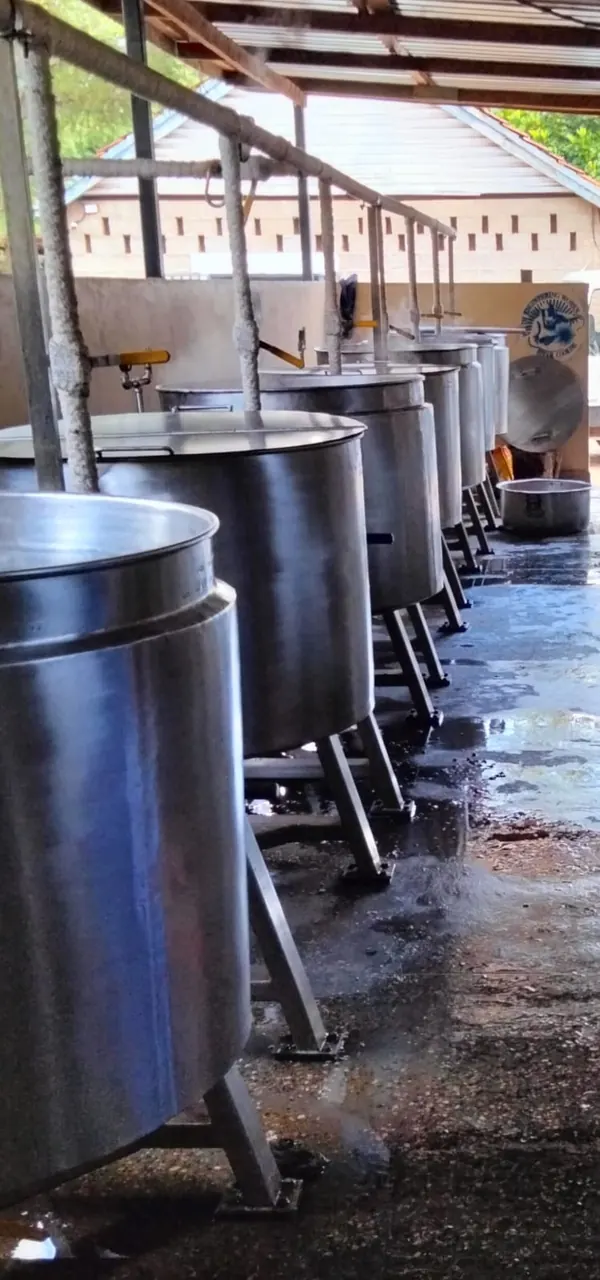
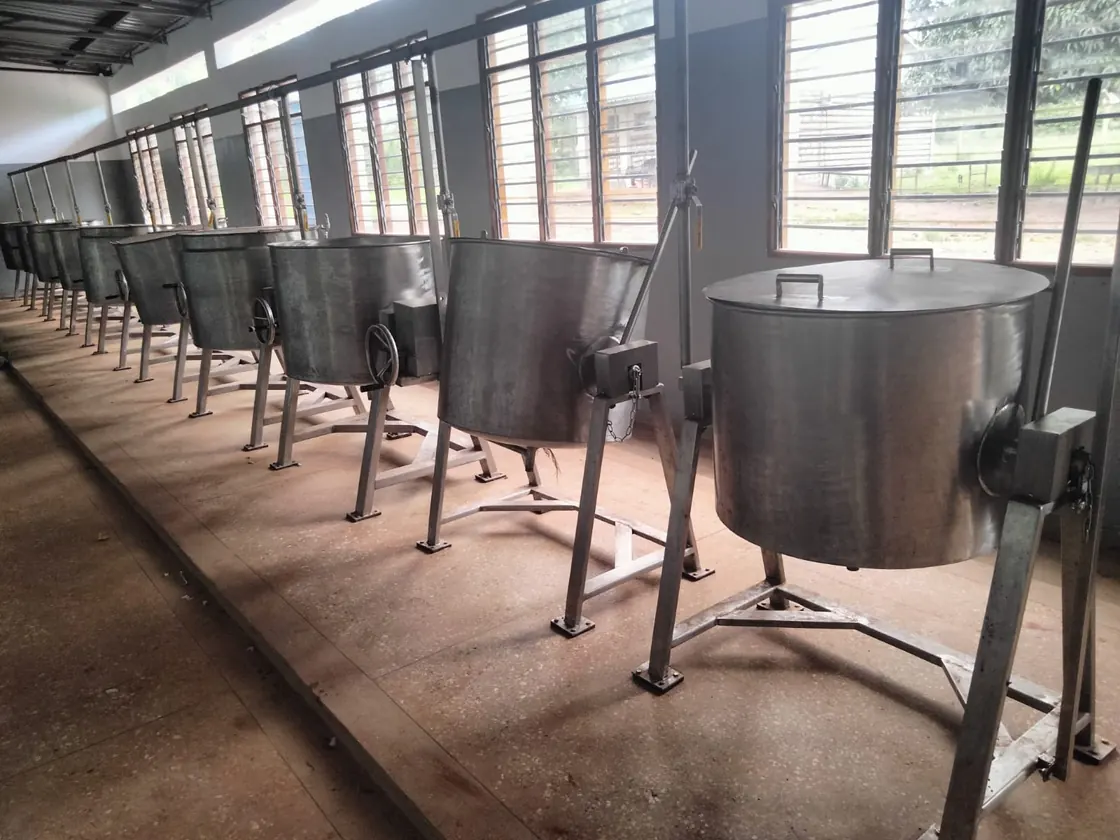
Several jacketed or non-jacketed vessels cook at once. Steam traps safely remove condensate.
Tilt & serve
Operators tilt to serve, then rinse and steam-flush. The kitchen resets quickly for the next meal.
Built to fit your kitchen and your headcount
Modular capacity
From about 50–100 meals per cook cycle up to 5,000–30,000 meals, by adding vessels or generator capacity. No redesign needed.
Flexible fuels
LPG is preferred. Grid electricity, solar PV, biogas and bioethanol are possible; firewood or briquettes only where necessary.
Compact footprint
Around 4 × 4 ft for the generator and about 15 × 10 ft for vessels and work area, with clearance for safe tilting.
Lean staffing
Two or three operators per 3–4 vessels: a steam operator, a vessel cook and a runner. Nobody has to stand over a flame.
Built-in safety
Pressure-rated vessels, relief valves, steam traps and isolation valves. Joints are pressure-tested at commissioning with KEBS-compliant fittings.
Smart automation
Water auto-fill and burner auto on/off stop fuel being burned while vessels are idle or already at temperature.
Hit the lunch bell, every day
Because vessels run in parallel, cooking time per vessel stays about the same whether you feed 100 learners or 2,500.
Times vary with water temperature, altitude, pre-soaking and fill levels. We confirm benchmarks for your site during commissioning.
| Dish | Typical cook time |
|---|---|
| Vegetables | 10 – 20 min |
| Rice | 35 – 45 min |
| Ugali / grains | 40 – 50 min |
| Meat or pre-soaked beans | 45 – 60 min |
| Learners | Vessels | Full service |
|---|---|---|
| ~100 | 1 set | 60 – 80 min |
| 1,000 – 1,500 | 2 – 4 | 70 – 100 min |
| 2,000 – 2,500 | 4 – 6 | 80 – 110 min |
A system that pays for itself
Indicative prices by number of learners, including transport and installation. Payback comes from savings on fuel, food, maintenance, water, labour and time.
Prices are indicative and exclude civil works. Entry-level systems for small schools start from approximately KES 500,000. Carbon-finance support may help offset capital costs. Request an exact quote
We stay with you long after installation
- On-site training & certification at commissioning, plus operator manuals in English and Kiswahili.
- 12-month manufacturer's warranty covering materials and workmanship.
- Service & maintenance agreements for preventive care, call-outs and parts.
- ~80% of spare parts are available locally in major towns; the rest are stocked at our factory.
- Water treatment such as softeners or RO is specified in hard-water areas to prevent scale.
Frequently asked questions
How is steam cooking different from jikos or gas burners?
With gas burners or jikos, every pot needs its own flame. Steam cooking uses one fire or energy source to generate steam, which heats several closed vessels evenly. That prevents scorching, keeps the texture of food such as ugali, means fewer fire points, and makes cooking faster, cleaner and more comfortable for staff.
Where can I see a steam kitchen in operation?
We can arrange demonstrations at existing installations, including Nairobi School, Kwale Boys and Kwale Girls High Schools, St. John's Kaloleni and Garissa High School (all 2,500 meals), Madogo Secondary School (1,500 meals) and Henny's Children's Home in Kwale (350–500 meals).
The best time to visit is from morning preparation through lunch service. All visits must be booked in advance through the school's administration for clearance, safeguarding and PPE.
What capacities can the system handle?
The design is modular. It can be configured from roughly 50–100 meals per cook cycle up to around 5,000–30,000 meals by adjusting the number of vessels and the generator size. A typical layout has one energy point serving about four vessels.
Which fuels can power the steam generator?
LPG is preferred for cleanliness and control. Grid electricity, solar PV, biogas and bioethanol can be used where justified; firewood and briquettes only when necessary. An environmental assessment helps choose the least-impact, most cost-effective fuel for each site.
Will it work in ASAL areas with limited water and infrastructure?
Yes. The system is designed to cut fuel use by roughly 50–80% compared with traditional methods and overall water use by 50–70%. For remote sites we plan fuel supply, safe storage and scheduled maintenance.
Can the system be customised?
Yes. We tailor the number and type of vessels (jacketed or non-jacketed) and the firing arrangement to your requirements and space, including multi-pot lines for high-throughput kitchens.
What changes should cooks expect in their daily routine?
Faster start-to-serve times, less manual stirring and simpler clean-up thanks to stainless vessels and tilting mechanisms. Work shifts to loading, timing and safe serving instead of watching flames, which leaves more time for hygiene and portion control.
What's the best order to cook dishes for lunch service?
Start with the densest items (beans, meat, soaked legumes), then rice or porridge. Add vegetables in the last 10–20 minutes to keep their texture, and time ugali to finish just before serving. Leave a 5–10 minute buffer for decanting.
Who trains our kitchen staff?
Faith Engineering and its partners provide on-site training and certification at commissioning, covering start-up, monitoring, tilting, serving and shutdown. We supply manuals in English and Kiswahili, run refresher sessions, and use a train-the-trainer model so skills carry over when staff change.
Can we expand the system if enrolment grows?
Yes. Additional pots can be connected to the steam manifold up to the generator's rated capacity. Beyond that, we can add a second generator or install a larger unit with minimal rework.
What safety features are built in?
Pressure-rated stainless vessels with gauges, relief valves and steam traps, operated under standard procedures with PPE. There are routine checks at start of day, before serving and at end of day, plus incident reporting. Burn, fire and pressure risks are significantly lower than in open-fire kitchens.
What happens if there's an emergency or equipment failure?
Kitchens are trained in troubleshooting and shutdown, including emergency stops, isolation valves and lock-out/tag-out. Only KEBS-compliant components are used, joints are pressure-tested at commissioning, and there's a clear escalation line to our technicians. We recommend keeping legacy stoves as a fallback for the first few months.
How is the system cleaned and maintained?
Stainless vessels and lids clean quickly with hot water and detergent, with no soot to remove. Daily care includes a short steam-flush, wiping the gaskets and checking the hinges and tilt mechanism. In hard-water areas, add a weekly descale. Scale is also checked during termly maintenance.
How much does a steam cooking system cost?
It depends on the number of learners. Indicative prices, including transport and installation but excluding civil works, are: 500 learners ≈ KES 3.7M; 1,000 ≈ KES 5.8M; 1,500 ≈ KES 8.5M; 2,000 ≈ KES 10.8M; 2,500 ≈ KES 14.7M. Entry-level systems for small schools start from about KES 500,000.
What return on investment can we expect?
Expected payback is about 2 years for 500 learners, 3 years for 1,000, about 3 years 8 months for 1,500, 4 years for 2,000 and about 4 years 3 months for 2,500. These figures are based on cumulative savings in fuel, raw food, maintenance, water, labour and time.
Who pays for maintenance?
The first 12 months are covered by the manufacturer's warranty (excluding consumables). After that, schools sign a service and maintenance agreement for preventive maintenance, call-outs and parts. Long term, we're training qualified TVET technicians across all 47 counties.
Are spare parts expensive or hard to find?
About 80% of parts are available locally in major towns; the rest are stocked at our factory or made to order. Service agreements include a spares plan, and commonly replaced items are priced to stay affordable for public institutions.
Let's size a system for your institution
Share your number of learners and kitchen layout, and we'll recommend a configuration with a full cost and savings estimate.